Harry Brook 202 Runs: England Star Smashes Fastest ODI Double Century
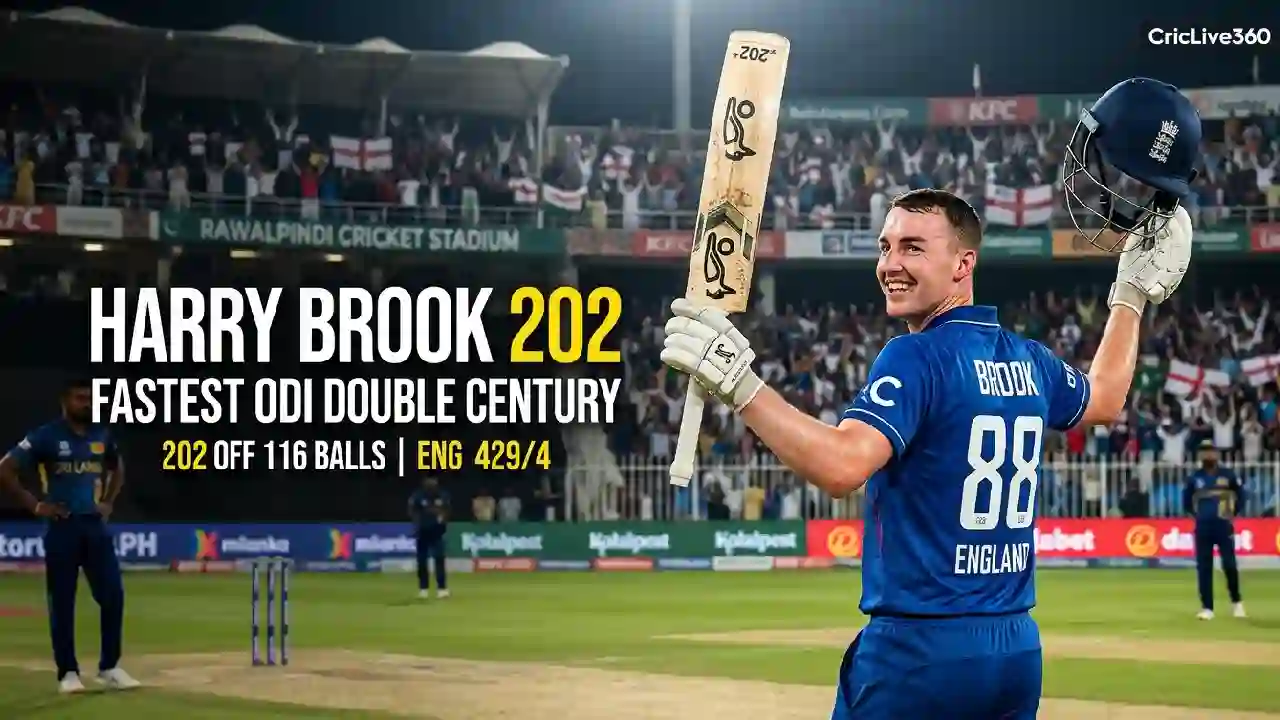
Harry Brook produced a remarkable batting performance against Sri Lanka on October 22, 2026, scoring 202 runs from just 116 balls in the ODI tri-series match at Rawalpindi Cricket Stadium. His extraordinary innings helped England post a huge total of 429/4 in 50 overs and created a new milestone in men’s One Day International cricket.
The England captain reached his double century in only 114 balls, setting a new record for the fastest double century in men’s ODI history. His innings included 21 fours and 10 sixes, giving England the momentum they needed to finish with a commanding total.
Brook’s achievement was significant for another reason. He became the first English batter to score a double century in men’s ODI cricket, taking the country’s individual scoring record beyond the previous best of 182 runs.
Harry Brook Makes History in Rawalpindi
Brook arrived at the crease when England needed to build a strong innings after losing early wickets. Rather than rushing his approach from the beginning, he gradually settled in before increasing the scoring rate.
Once he found his rhythm, Brook began to attack the Sri Lankan bowling with confidence. He used the full width of the ground, combined powerful strokes with clever placement and punished loose deliveries.
His innings eventually reached 202 from 116 balls. The knock featured 31 boundaries, consisting of 21 fours and 10 sixes. Brook was dismissed on the final delivery of England’s innings, but by then he had already delivered one of the most memorable performances in the format.
His ability to maintain an aggressive approach while still finding gaps in the field made the innings particularly effective. It was not simply a collection of big hits; it was a sustained performance that carried England towards a massive total.
Fastest Double Century in ODI Cricket
Brook’s double century rewrote the record books. He reached 200 in 114 deliveries, moving ahead of India’s Shubman Gill, who had previously held the record after reaching the milestone in 117 balls against the West Indies in 2026.
The three-ball difference may appear small, but it highlights the remarkable speed at which Brook scored his runs.
India’s Ishan Kishan previously held the record after scoring a double century in 126 balls against Bangladesh in 2022. Australia’s Glenn Maxwell also produced a memorable double century, making 201 not out from 128 balls against Afghanistan during the 2023 World Cup.
Brook’s performance moved him to the top of the fastest ODI double-century list. It also demonstrated how quickly a batter can change the direction of a 50-over innings when timing, placement and power come together.
fastest double century in men's ODI cricket
First England Batter to Score an ODI Double Century
England has produced several outstanding ODI batters, but a double century had remained an unachieved milestone for the country in men’s international one-day cricket.
Brook changed that with his 202 against Sri Lanka. In doing so, he surpassed Ben Stokes’ previous England record of 182, scored against New Zealand in 2023.
Brook’s achievement was especially notable because he was leading the side as captain. His innings gave England both a historic individual performance and a huge team total in an important tri-series fixture.
The knock also underlined Brook’s growing importance in England’s white-ball setup. His ability to combine attacking intent with an extended innings makes him a dangerous opponent when he gets established at the crease.
Joe Root and Will Jacks Support the Big Total
Although Brook dominated the headlines, England’s total was built with valuable contributions from other batters.
Joe Root scored 69 runs from 66 balls, helping England recover and build a strong partnership with Brook. Their stand gave the captain the platform to continue his innings and increase the scoring rate.
Will Jacks then added a rapid unbeaten 66 from only 30 deliveries. His late acceleration helped England finish strongly, putting additional pressure on Sri Lanka’s bowling attack.
Tom Banton also contributed with 50 runs from 51 balls, while Ben Duckett made 29. These contributions helped England recover from the loss of early wickets and maintain their scoring momentum.
England’s final total of 429/4 reflected both Brook’s extraordinary innings and the support he received from the batting lineup. The team finished with a formidable score after reaching another major milestone in ODI cricket.
Sri Lanka Face a Difficult Challenge
Chasing 430 runs would require an exceptional batting performance from Sri Lanka. England’s total left little room for a slow start, meaning the opening batters would need to find a balance between keeping wickets in hand and scoring quickly.
A successful chase of this size would demand partnerships, calculated aggression and consistent scoring throughout the innings. Losing wickets in clusters could make the target even harder to reach.
For England, the priority after posting such a large total would be to maintain discipline with the ball and avoid giving Sri Lanka an easy start. Early wickets could put the batting side under immediate pressure.
Brook’s innings had already placed England in a strong position, but the final result would depend on how Sri Lanka responded to the challenge.
What Harry Brook’s Record Means for England
Brook’s double century represents an important moment for English ODI cricket. Becoming the country’s first men’s ODI double-centurion places his name in a special part of the record books.
His innings also showed the value of building an innings before accelerating. After getting settled, Brook attacked with greater freedom and maintained a scoring rate that Sri Lanka struggled to contain.
For England, performances of this kind can provide confidence and demonstrate the team’s batting potential. For Brook personally, the achievement adds another major milestone to his international career.
The record may eventually be broken, but Brook’s name will remain attached to the first English men’s ODI double century and the fastest double century recorded in the format at the time of his innings.
Match Summary: England vs Sri Lanka
- Match: England vs Sri Lanka, ODI tri-series
- Date: October 22, 2026
- Venue: Rawalpindi Cricket Stadium, Rawalpindi
- England score: 429/4 in 50 overs
- Harry Brook: 202 runs off 116 balls
- Brook’s boundaries: 21 fours and 10 sixes
- Joe Root: 69 runs off 66 balls
- Will Jacks: 66 not out off 30 balls
- Tom Banton: 50 runs off 51 balls
- Key record: Fastest double century in men’s ODI history; first English men’s ODI double-centurion
Frequently Asked Questions
How many runs did Harry Brook score against Sri Lanka?
Harry Brook scored 202 runs from 116 balls in the ODI tri-series match against Sri Lanka in Rawalpindi.
How many balls did Harry Brook take to score 200?
Brook reached his double century in 114 balls, setting a new record for the fastest double century in men’s ODI cricket.
How many fours and sixes did Harry Brook hit?
His innings included 21 fours and 10 sixes.
Was Harry Brook the first English batter to score an ODI double century?
Yes. Brook became the first English batter to score a double century in men’s ODI cricket.
What was England’s total after Harry Brook’s double century?
England finished on 429/4 in 50 overs, with Joe Root scoring 69 and Will Jacks contributing an unbeaten 66.
Whose record did Harry Brook break?
Brook broke the previous record for the fastest men’s ODI double century held by India’s Shubman Gill, who had reached 200 in 117 balls.
Final Thoughts
Harry Brook’s 202 against Sri Lanka was more than a big individual score. It was a record-breaking innings that made him the first English batter to score a double century in men’s ODI cricket and established a new benchmark for the fastest double century in the format.
With 21 fours, 10 sixes and a remarkable scoring rate, Brook led England to 429/4 and gave the Rawalpindi crowd a memorable display of modern ODI batting. His achievement will be remembered as a landmark moment in England’s one-day international history.
Read More latest cricket news