IND vs WI 3rd T20I 2026: India Win by 14 Runs
IND vs WI 3rd T20I 2026: India Win by 14 Runs. India produced a powerful batting display and a determined bowling performance to defeat West Indies by 14 runs in the third T20 International at Holkar Stadium in Indore on 11 October 2026. Abhishek Sharma set the tone with an explosive 69 off 30 balls, while Arshdeep Singh delivered three crucial wickets to help India defend a challenging total of 224.
The victory put India ahead 2-1 in the five-match T20I series, restoring their advantage after West Indies won the second match in Ranchi. Although India’s innings lost momentum after a spectacular start, the bowlers held their nerve when the visitors threatened to turn the chase around.
West Indies managed 209 for 7 after 20 overs but ended the innings 14 runs behind the target. Shimron Hetmyer, Kamil Pooran and Shamar Springer offered strong resistance, but India’s key breakthroughs at important moments proved decisive.
Match Overview
The third T20I brought together two teams with contrasting objectives. India wanted to recover their series lead, while West Indies aimed to build on their six-wicket victory in Ranchi.
India’s decision-making under pressure proved important. Their batters attacked from the beginning, and the bowlers responded after the visitors threatened to make the chase competitive.
IND vs WI 3rd T20I 2026: Match Details
- Match: India vs West Indies, 3rd T20I
- Date: 11 October 2026
- Venue: Holkar Stadium, Indore, India
- Toss: West Indies won the toss and elected to field
- India: 223 all out in 20 overs
- West Indies: 209/7 in 20 overs
- Result: India won by 14 runs
- Player of the Match: Arshdeep Singh
- Series score: India lead 2-1
India set a total of 223, thanks largely to a powerful start from openers Abhishek Sharma and Ishan Kishan. Their attacking batting put the hosts in a commanding position, although India eventually lost all ten wickets before the innings concluded.
The result also demonstrated the importance of defending a big total in T20 cricket. A strong batting performance can create an advantage, but disciplined bowling is necessary to turn that advantage into victory.
Toss, Pitch & Weather
West Indies captain Shai Hope won the toss and chose to bowl first at Holkar Stadium. The decision gave his team an opportunity to restrict India and then chase under the lights.
The Indore surface offered favourable conditions for stroke-making. The ball came onto the bat well, allowing attacking players to find gaps and clear the boundary. India’s 87/1 in the powerplay showed how effectively the home side used those conditions.
However, the pitch was not the only factor. West Indies struggled to contain India’s early aggression, while India’s bowlers later showed that accurate execution could still create opportunities.
The weather was reported as clear, with a temperature of approximately 27°C. The absence of significant dew also helped India’s bowlers maintain control during the chase. Arshdeep Singh indicated after the match that he had managed to get some reverse movement, which proved useful in the later stages.
Playing XI
The following batting line-ups and bowling personnel are reflected in the published match scorecard.
India: Sanju Samson, Abhishek Sharma, Ishan Kishan, Shreyas Iyer (captain), Tilak Varma, Naman Dhir, Nitish Kumar Reddy, Axar Patel, Arshdeep Singh, Prince Yadav and Mayank Yadav.
West Indies: Shai Hope (captain), Kamil Pooran, Shimron Hetmyer, Rovman Powell, Sherfane Rutherford, Quentin Sampson, Keemo Paul, Shamar Springer, Roston Chase, Gudakesh Motie and Shamar Joseph.
Quentin Sampson made his T20I debut for West Indies in this match. The young batter was part of the middle order and contributed 21 runs from 15 balls during the chase.
First Innings: Abhishek Sharma Leads India’s Charge
India began aggressively despite losing Sanju Samson for just three runs. Abhishek Sharma refused to let the early dismissal affect his approach, attacking the bowlers with confident stroke play and quick running between the wickets.
Ishan Kishan joined him and immediately increased the scoring rate. The pair combined power with timing, punishing loose deliveries and forcing West Indies to adjust their bowling plans.
India raced to 87/1 in the first six overs, creating a strong foundation for a total well above 200. Abhishek reached his half-century in just 18 balls, demonstrating his ability to change the direction of a T20 innings within a few overs.
He eventually scored 69 from 30 deliveries, including six fours and five sixes. His innings ended when Shamar Springer took his wicket at 124/4 in the 10th over.
Kishan also made a valuable contribution, scoring 37 from 18 balls with six fours and one six. Their partnership added 108 runs in only 40 balls, putting India in a commanding position.
The middle order, however, struggled to maintain that momentum. Shreyas Iyer scored only one run before Roston Chase dismissed him. Tilak Varma made 28 from 16 balls but was run out, while Naman Dhir contributed ten from five deliveries.
India’s lower order added useful runs, although the innings became increasingly unstable. Nitish Kumar Reddy scored 21 from 14 balls, Axar Patel made 20 from 14, and Arshdeep Singh added 11 from eight.
Prince Yadav provided an important late contribution with an unbeaten 13 from six balls. India were eventually bowled out for 223 in exactly 20 overs.
For West Indies, Roston Chase, Shamar Joseph and Shamar Springer claimed two wickets each. The visitors had some success in the middle and final overs, but India’s explosive start ensured they still faced a demanding target.
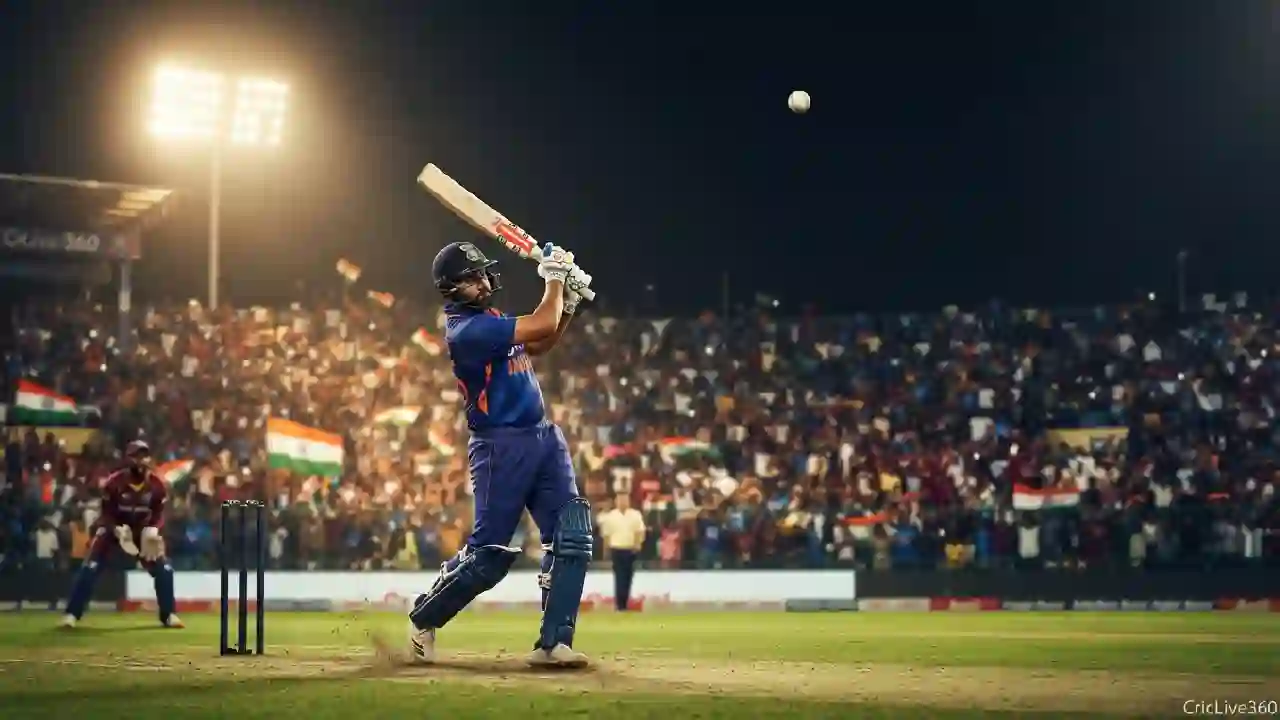
Second Innings: West Indies Fight Back but Fall Short
West Indies needed 224 runs to win, requiring a sustained attacking effort against India’s bowling attack.
Their chase suffered an early setback when captain Shai Hope was dismissed for five by Arshdeep Singh. The early wicket gave India a useful opening, but the visitors responded through Kamil Pooran and Shimron Hetmyer.
Pooran scored 42 from 27 balls, striking three fours and three sixes. Hetmyer added 43 from 26 deliveries, including six fours and two sixes. Their partnership gave West Indies renewed hope and helped them keep the required run rate within reach.
The pair attacked the bowling and took advantage of scoring opportunities, bringing the visitors back into contention. Naman Dhir then changed the momentum by dismissing both batters.
Rovman Powell had already fallen for five, and his departure left West Indies needing more from their remaining middle-order players.
Sherfane Rutherford contributed 32 from 20 balls, while Quentin Sampson scored 21 from 15. Their efforts kept the chase alive, but India continued to find wickets at important moments.
Arshdeep returned to make further inroads, removing Rutherford and Keemo Paul. The quick wickets left West Indies with too much work to do in the final overs.
Shamar Springer produced a late burst of power, smashing an unbeaten 35 from just 11 balls, including four sixes. Roston Chase remained unbeaten on five, but West Indies ended on 209/7.
India’s bowling attack had done enough to protect the total, sealing a 14-run victory in a match that remained competitive until the closing overs.
Scorecard Summary
| Team | Score | Overs |
|---|---|---|
| India | 223 all out | 20.0 |
| West Indies | 209/7 | 20.0 |
India’s leading batters
-
Abhishek Sharma — 69 off 30 balls
-
Ishan Kishan — 37 off 18 balls
-
Tilak Varma — 28 off 16 balls
-
Nitish Kumar Reddy — 21 off 14 balls
-
Axar Patel — 20 off 14 balls
West Indies’ leading batters
-
Shimron Hetmyer — 43 off 26 balls
-
Kamil Pooran — 42 off 27 balls
-
Shamar Springer — 35 not out off 11 balls
-
Sherfane Rutherford — 32 off 20 balls
-
Quentin Sampson — 21 off 15 balls
Best bowling performances
-
Arshdeep Singh — 3/44 in four overs
-
Naman Dhir — 2/39 in three overs
-
Axar Patel — 1/33 in three overs
-
Nitish Kumar Reddy — 1/19 in two overs
-
Roston Chase — 2/38 in four overs for West Indies
Top Performers
Abhishek Sharma was India’s standout batter. His 69-run innings came at a strike rate of 230, and his rapid scoring helped India dominate the opening six overs.
Ishan Kishan’s contribution was equally important to the partnership. His 37 from 18 balls ensured the scoring rate remained high even as Abhishek took the lead in the attack.
Arshdeep Singh was India’s most influential bowler. His three wickets included important breakthroughs during the chase, preventing West Indies from building a stable finish.
For West Indies, Hetmyer and Pooran offered the strongest resistance in the middle overs. Springer’s unbeaten 35 was another highlight, although his late hitting came too late to change the result.
Turning Point
The dismissal of Shimron Hetmyer and Kamil Pooran proved decisive in the second innings. Their partnership had brought West Indies back into the contest after the early loss of Hope.
Naman Dhir broke that stand by removing both batters. Those wickets reduced the visitors’ options and increased the pressure on the remaining middle order.
Arshdeep Singh then made further breakthroughs, dismissing Rutherford and Keemo Paul. West Indies continued to score quickly, but the wickets prevented them from maintaining the momentum required to chase 224.
India’s recovery with the ball was especially important because their innings had lost several wickets after reaching 115/1. The bowlers ensured that the batting side’s strong start was not wasted.
Key Moments
Several moments shaped the outcome of the match:
Samson’s early dismissal: Sanju Samson fell for three, but Abhishek and Kishan responded with an aggressive partnership.
Abhishek’s rapid fifty: He reached 50 in 18 balls and put India’s innings firmly on track.
The 108-run partnership: Abhishek and Kishan added 108 from only 40 balls.
India’s middle-order setbacks: A series of wickets prevented the hosts from converting their start into an even bigger total.
Hope’s early dismissal: Arshdeep removed the West Indies captain for five.
Naman Dhir’s double strike: Hetmyer and Pooran both fell to Dhir, disrupting the chase.
Arshdeep’s late breakthroughs: Rutherford and Keemo Paul were dismissed as India regained control.
Springer’s late assault: His unbeaten 35 from 11 balls made the finish more competitive, but West Indies still fell short.
Result
India defeated West Indies by 14 runs in the third T20I at Indore. After scoring 223 all out, India restricted the visitors to 209/7 in 20 overs.
The win gave India a 2-1 lead in the five-match series. It also showed the value of a balanced team performance: Abhishek Sharma and Ishan Kishan provided the early runs, while Arshdeep Singh and the supporting bowlers took important wickets when the chase threatened to gain momentum.
Player of the Match
Arshdeep Singh was named Player of the Match for his influential bowling performance. He finished with figures of 3/44 from four overs and also contributed 11 runs with the bat.
His wickets helped India break West Indies’ partnerships at crucial stages. Although Springer’s late hitting kept the visitors interested, Arshdeep’s breakthroughs helped ensure India remained ahead.
Abhishek Sharma’s explosive innings was another major factor in the victory, but Arshdeep’s contribution with the ball proved decisive in the final result.
Records & Milestones
The match produced several notable performances and milestones.
Abhishek Sharma scored 69 from 30 balls, striking at 230.
Abhishek reached his half-century in 18 deliveries.
India scored 87/1 during the powerplay.
Abhishek Sharma and Ishan Kishan shared a 108-run partnership from 40 balls.
India’s innings ended at 223 all out, with a run rate of 11.15.
Shamar Springer scored an unbeaten 35 from 11 balls at a strike rate above 300.
Arshdeep Singh claimed three wickets and earned the Player of the Match award.
Quentin Sampson made his T20I debut for West Indies.
These performances highlighted the attacking nature of the contest, with both sides producing periods of rapid scoring.
Series Situation
The victory moved India ahead 2-1 in the five-match T20I series.
India won the opening match in Lucknow by eight wickets, chasing West Indies’ 171 in 14.4 overs. West Indies levelled the series in Ranchi with a six-wicket win after chasing India’s 249/5. India’s response in Indore restored their advantage.
The third match was important because it tested India’s ability to defend a total after the previous game’s successful West Indies chase. This time, India’s bowlers made the necessary breakthroughs and kept the target beyond reach.
What Happens Next?
The fourth T20I is scheduled for 14 October 2026 at the Rajiv Gandhi International Stadium in Hyderabad.
India will have an opportunity to secure the series with another victory. West Indies, meanwhile, must win to level the contest at 2-2 and take the series to a deciding fifth match in Bengaluru on 17 October.
The next game will test whether West Indies can improve their bowling execution and build a more stable chase. India will want to maintain their aggressive batting approach while reducing the middle-order collapses that prevented them from scoring more than 223 in Indore.
Conclusion
India’s 14-run victory over West Indies in the third T20I was built on two key contributions. Abhishek Sharma’s explosive 69 gave the hosts an excellent start, while Arshdeep Singh’s three wickets helped stop the visitors from completing a difficult chase.
West Indies showed determination through the middle overs and finished strongly through Shamar Springer, but the wickets they lost at crucial stages proved costly.
For India, the result was a timely response after the defeat in Ranchi. With a 2-1 series lead, they now have a chance to seal the contest in Hyderabad. West Indies must respond quickly if they are to keep their hopes of winning the series alive.
The third T20I demonstrated how quickly momentum can change in the shortest format—and why early runs, timely wickets and calm execution in the final overs remain essential to winning close matches.
FAQs
1. Who won the IND vs WI 3rd T20I 2026?
India defeated West Indies by 14 runs at Holkar Stadium in Indore on 11 October 2026.
2. How many runs did Abhishek Sharma score?
Abhishek Sharma scored 69 runs from 30 balls, including six fours and five sixes.
3. How did Arshdeep Singh perform?
Arshdeep Singh took three wickets for 44 runs in four overs and was named Player of the Match.
4. What was India’s score in the third T20I?
India scored 223 all out in 20 overs.
5. What was West Indies’ score?
West Indies finished on 209/7 in 20 overs while chasing a target of 224.
6. Who was West Indies’ top scorer?
Shimron Hetmyer was the highest scorer among West Indies’ batters, making 43 from 26 balls. Kamil Pooran scored 42, while Shamar Springer remained unbeaten on 35.
7. What is the series score after the third T20I?
India lead the five-match series 2-1 after winning the third match.
8. When is the fourth India vs West Indies T20I?
The fourth T20I is scheduled for 14 October 2026 in Hyderabad.
9. Who won the toss in the third T20I?
West Indies won the toss and chose to field first.
10. Why was India’s victory important?
The win restored India’s series lead after their defeat in Ranchi and put them one victory away from securing the five-match series.